MTSU hosts criminal justice educator workshop
Middle Tennessee State University gave high school educators from across Tennessee a hands-on look at the latest techniques in criminal justice and forensic science during its fourth annual Criminal Justice High School Educators Professional Development Workshop.
Hosted by MTSU’s Department of Criminal Justice, the summer workshop brought more than 40 high school Career and Technical Education teachers to campus for specialized training led by university faculty and professionals from the Murfreesboro Police Department.
Teachers participated in activities ranging from processing outdoor crime scenes to excavating skeletal remains, with the goal of taking new skills and classroom-ready exercises back to their students.
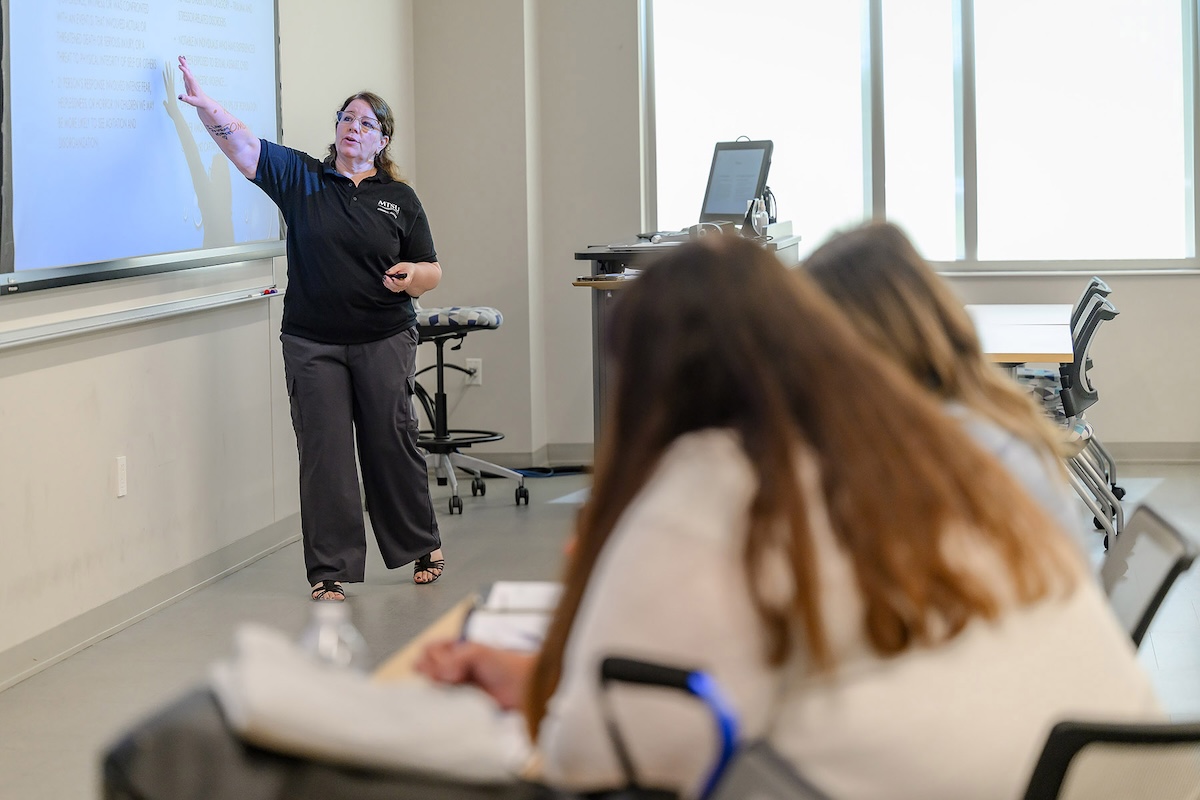
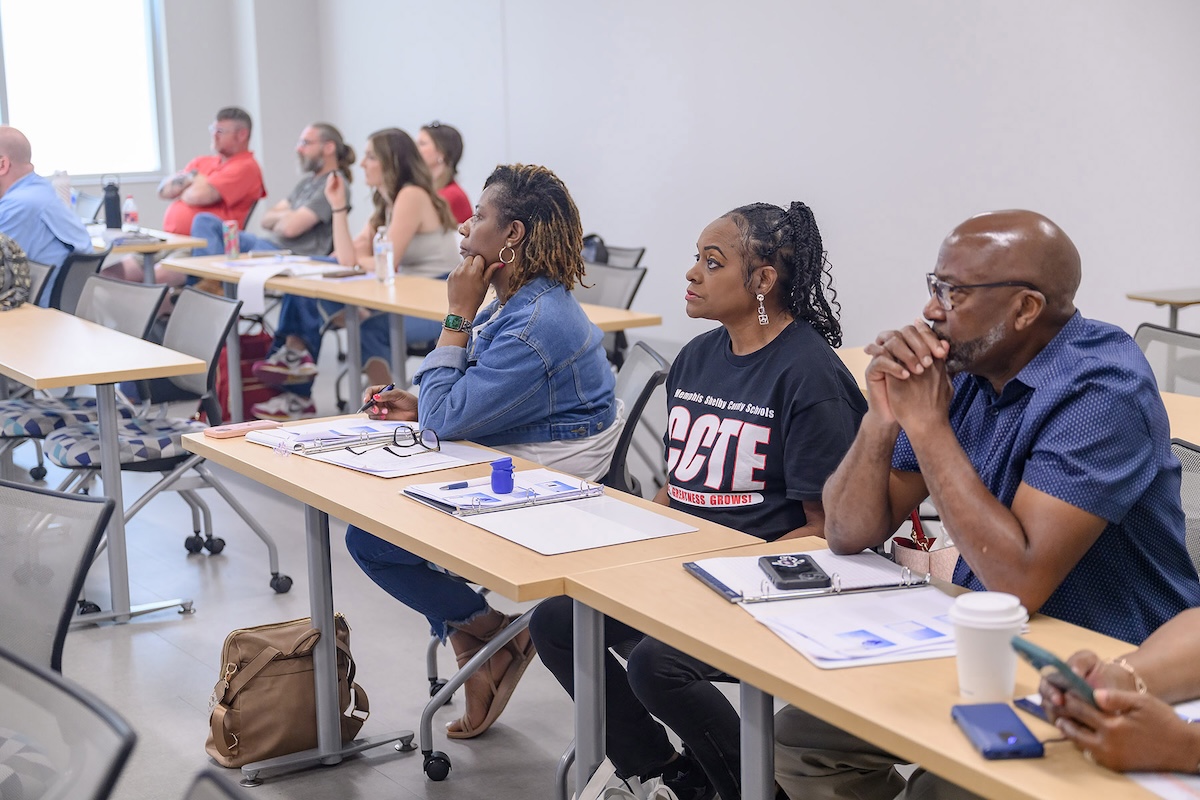
“This has been a great way for us to see what advances they’re making in high school curriculums and connect these educators with experts in the field who can provide them with skills, knowledge and practical exercises to use with their own students in areas in which they would like more education,” said Elizabeth Q. Wright, event coordinator and criminal justice professor at MTSU.
Forensic science and criminal justice faculty members worked alongside industry professionals to lead 90-minute sessions combining instruction with activities aligned with Tennessee Department of Education standards.
Topics included forensic anthropology, crime scene processing, emergency management, data analysis, domestic violence, current case law and emerging investigative techniques.
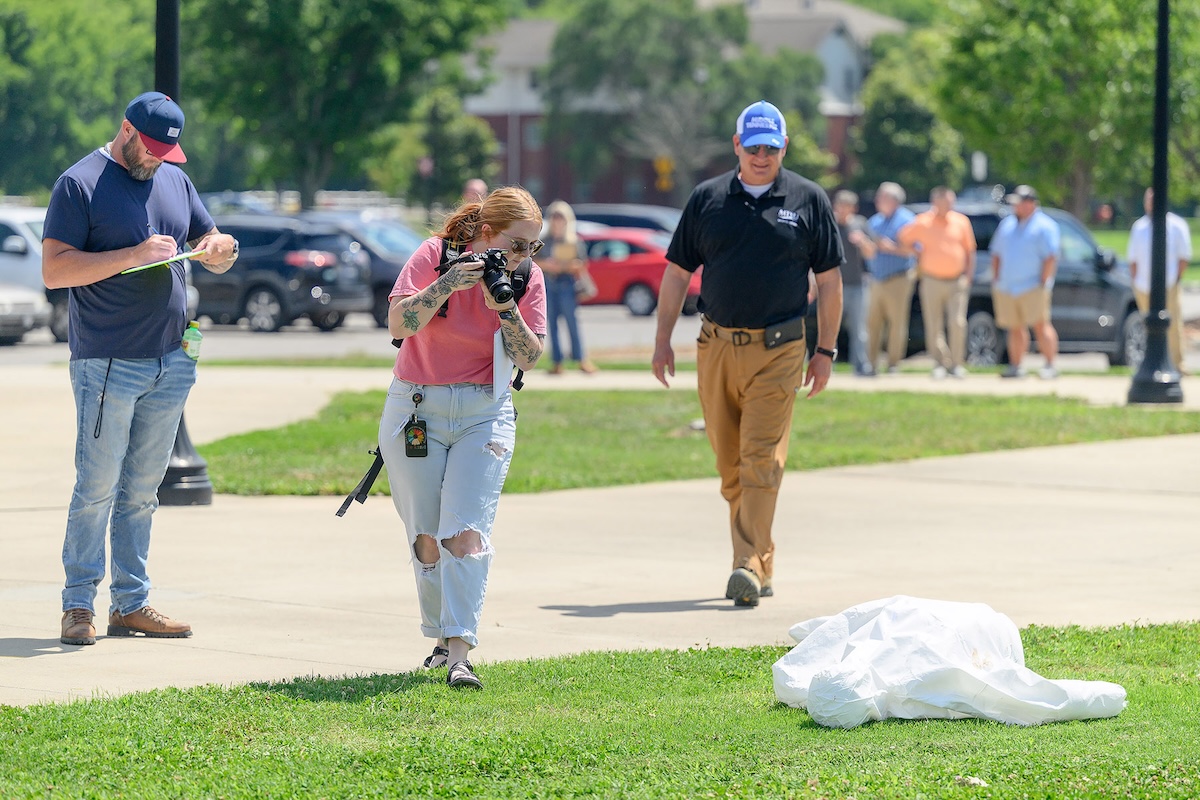
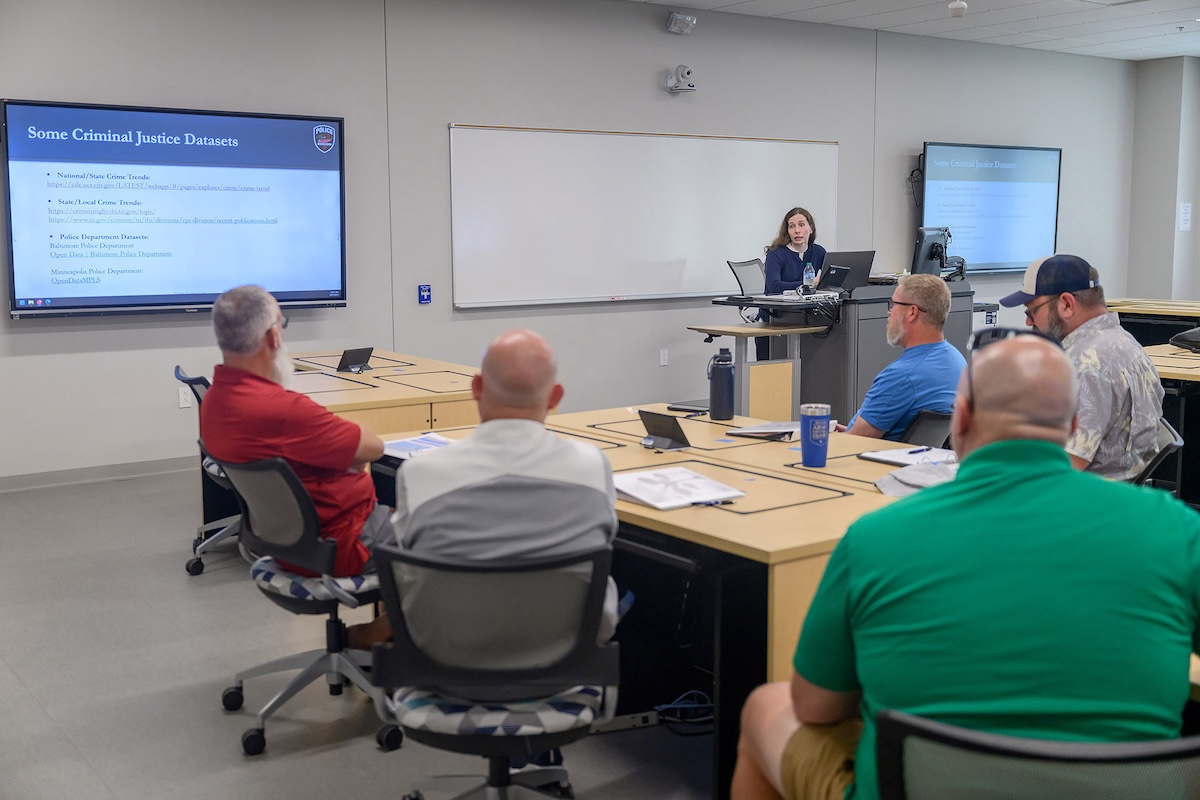
This year, organizers devoted half a day to crime scene reconstruction after teachers requested additional hands-on experience.
“The goal is to keep teachers’ knowledge current, introduce them to new developments in criminal justice and provide resources they can immediately take back to their classrooms,” Wright said.
For Lebanon High School criminal justice teacher J.D. Lakeman, the annual workshop helps fill a gap in specialized professional development available to CTE instructors.
“Teachers come from all kinds of backgrounds, law enforcement, the courts, probation. Everyone comes in with different strengths,” said Lakeman, who has attended all four workshops. “The training at MTSU lets teachers choose areas where they’re weaker and take those classes that are relevant to what our students need to learn.”
MTSU organizers tailor the workshop to state education standards while also using feedback from teachers to determine which topics and sessions are offered.
Lakeman, a former Atlanta-area police officer, said the ability to select sessions allowed him to concentrate on subjects outside his previous professional experience, including forensic anthropology, ballistics and forensic science.
Participants also leave the workshop with lesson materials, classroom resources and professional contacts they can use throughout the school year.
The program serves another purpose by introducing high school educators and their students to MTSU’s criminal justice and forensic science programs. Some high school students complete dual enrollment courses or earn college credit before arriving on campus, providing a head start toward earning a degree.
Wright said professional development remains important as criminal justice education continues to change alongside advances in technology, investigative methods and legal decisions.
Organizers are already considering new topics for next year’s workshop, including drone technology.
“Next year we’d like to incorporate drone technology because that’s becoming increasingly important in law enforcement, and teachers specifically requested it,” Wright said.
More information about the MTSU Department of Criminal Justice is available at criminaljustice.mtsu.edu. Details about MTSU’s forensic science degree program are available through mtsu.edu.