MTSU unveils Level II arboretum with ‘tree-mendous’ welcome
Middle Tennessee State University has officially elevated its campus arboretum to a Level II designation, marking a significant milestone in the institution’s long-standing commitment to sustainability and environmental education.
The announcement came during an April 16 event hosted by the Center for Energy and Sustainability, where students, faculty, staff and community members gathered near the Walnut Grove area on campus to celebrate the achievement. The designation, awarded by the Tennessee Urban Forestry Council, advances the university from its previous Level I status, which it first earned in 2015.


Kristin England, sustainability manager for the Center for Energy and Sustainability, said the recognition represents years of dedication from individuals across campus. She emphasized that the arboretum is more than just a certification. It is a growing, living resource designed to benefit the entire university community.
Kim Sadler, professor emerita in the Department of Biology, played a key role in the collaborative effort to secure the new designation. Speaking at the event, she highlighted the importance of trees beyond their basic functions. While trees are well known for producing oxygen and storing carbon, Sadler noted that they also support complex ecosystems. A single oak tree, for example, can sustain hundreds of species, including insects and birds.
The upgraded arboretum now features 73 labeled and mapped trees spread across MTSU’s 500-acre main campus. Each tree is marked with both its common and scientific name, along with a QR code that links to additional information. This initiative is part of a broader effort to transform the campus into an interactive learning environment.
Funding from student-supported Sustainable Campus Fee resources helped make the expansion possible. Teams across campus worked together to tag trees, create a digital map and increase accessibility for educational use. The project involved collaboration between England, assistant manager Kristen Hargis, Biology Department faculty Danielle Brown and Kim Sadler, and Jason Young from Grounds and Greenhouse Services.
Neal Letson, a volunteer with the Tennessee Urban Forestry Council, worked closely with the university to help certify the arboretum. He said MTSU plays a vital role in Murfreesboro’s urban forest canopy, combining education, research and long-term environmental impact in one location. He also emphasized the importance of engaging students, who will ultimately carry forward environmental stewardship efforts.
With the new designation, MTSU joins more than 170 certified arboreta across Tennessee.
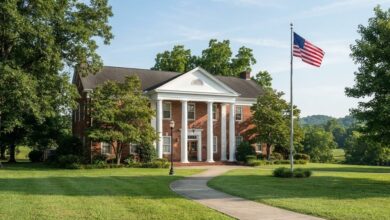
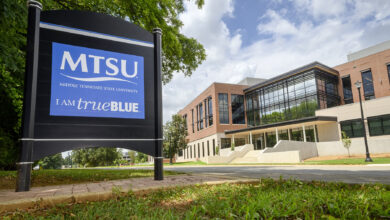
The event concluded with the unveiling of new signage recognizing the Level II status, followed by a guided half-mile walking tour led by Danielle Brown. Participants explored approximately 17 tree species throughout Walnut Grove and the Old Main Circle area, learning how to identify them and understand their ecological importance, from providing shade to supporting wildlife.
England said the vision for the arboretum is to extend learning beyond the classroom and encourage exploration across campus. The university is home to a wide variety of tree species, including sweetgum, cedar, catalpa, oak, maple and cherry, with some specimens dating back decades while others have been planted more recently.
As the arboretum continues to grow, university leaders hope it will inspire students and visitors alike to engage more deeply with the natural environment and discover something new about the trees that shape the campus landscape.